
Managing Asset Types
Define Your Asset Workflow
Once you have created your global Workflow, you can then define your Asset Types
Much like how shots can be organized by a sequence, an asset can be organised by it's Asset Type. Think of it as using folders to organize all your assets by category.
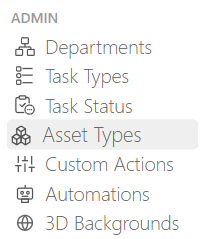
On the main menu  select the Asset Type page under the Admin section.
TIP
By default, Kitsu provides some example asset types that can be used for a CGI production.
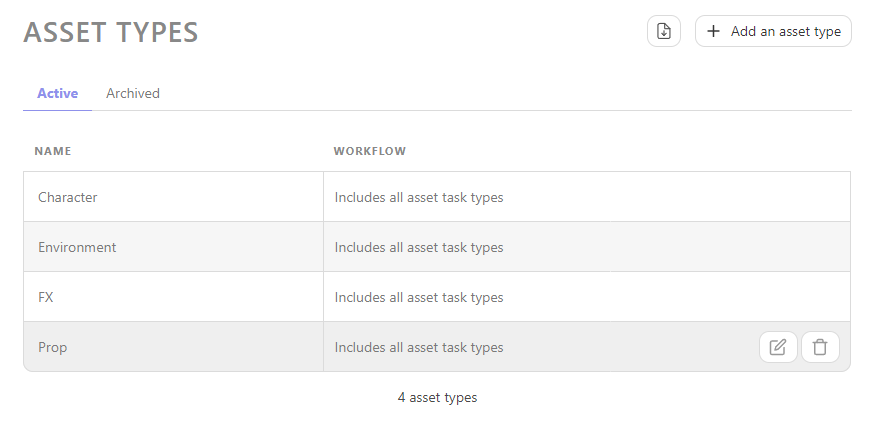
To create new Asset Type, click on the  button.
Next, you will need to supply some information about your Asset Type, including:
- The name of the asset type
- A workflow for the specific asset type
Different Asset Types will have distinct workflows. For instance, you might have fewer tasks for an Environment compared to a Character, as Environment assets typically don't require Rigging tasks.
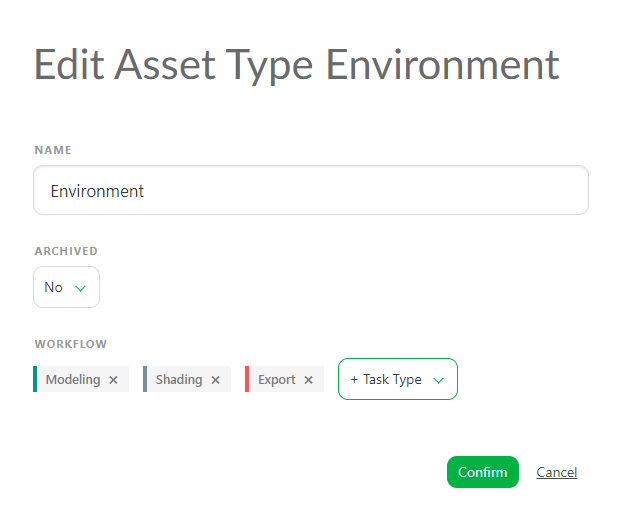
When you create or edit an Asset Type, you can add a specific task type; if you don't select a specific workflow for this asset type, your production asset workflow will be applied.
However, if you choose specific Task types for this Asset type, only these will be applied to production.
Click on Confirm to save your changes.
Your new Asset Type is now created in your Global Library. It will be available to use when you create your production.
TIP
At any point during production, you can revisit this section to create additional Asset Types as necessary and add them into your workflow.
Enabling Specific Asset Types for a Production
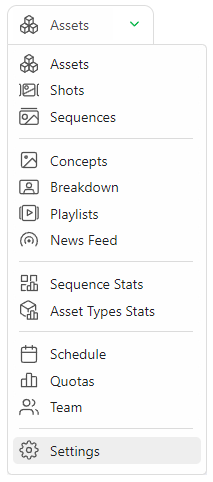
On the Navigation Menu, choose on the dropdown menu the Setting.
Per default, Kitsu will load the Asset Types you have defined when creating the production.
However, you can add or remove specific Asset Types if they are created on the Global Library first.
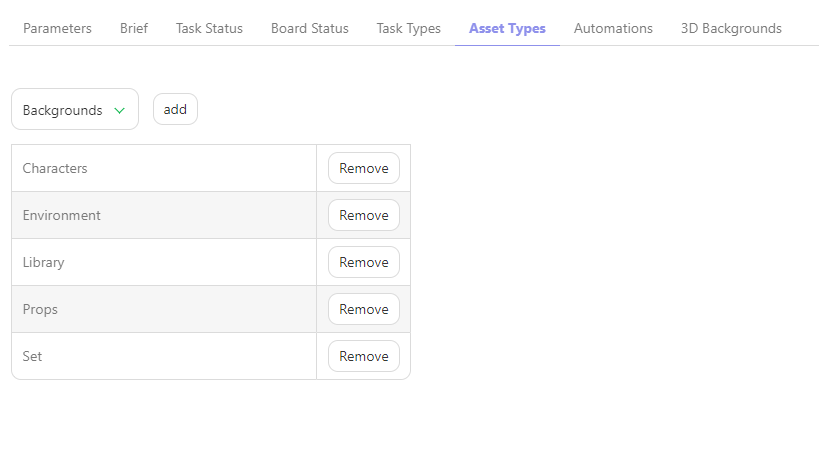
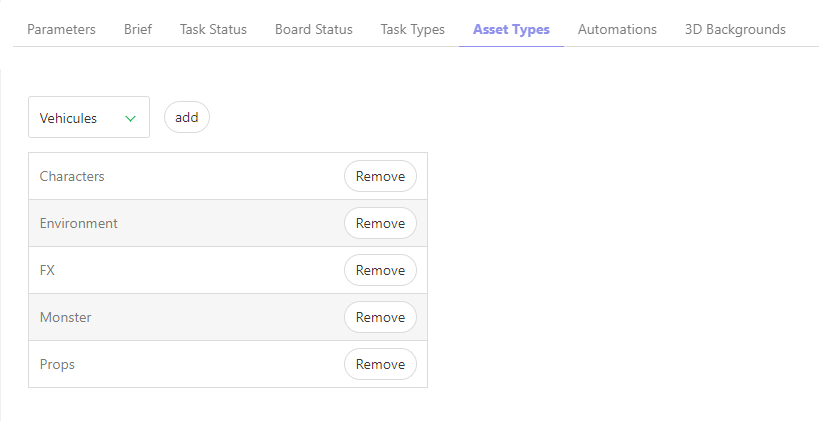
On the Asset Types tab, you can choose which Asset Types you want to add or remove on this production, validate your choice with the add button.
Update an Asset Type
TODO
Remove an Asset Type*
TODO